
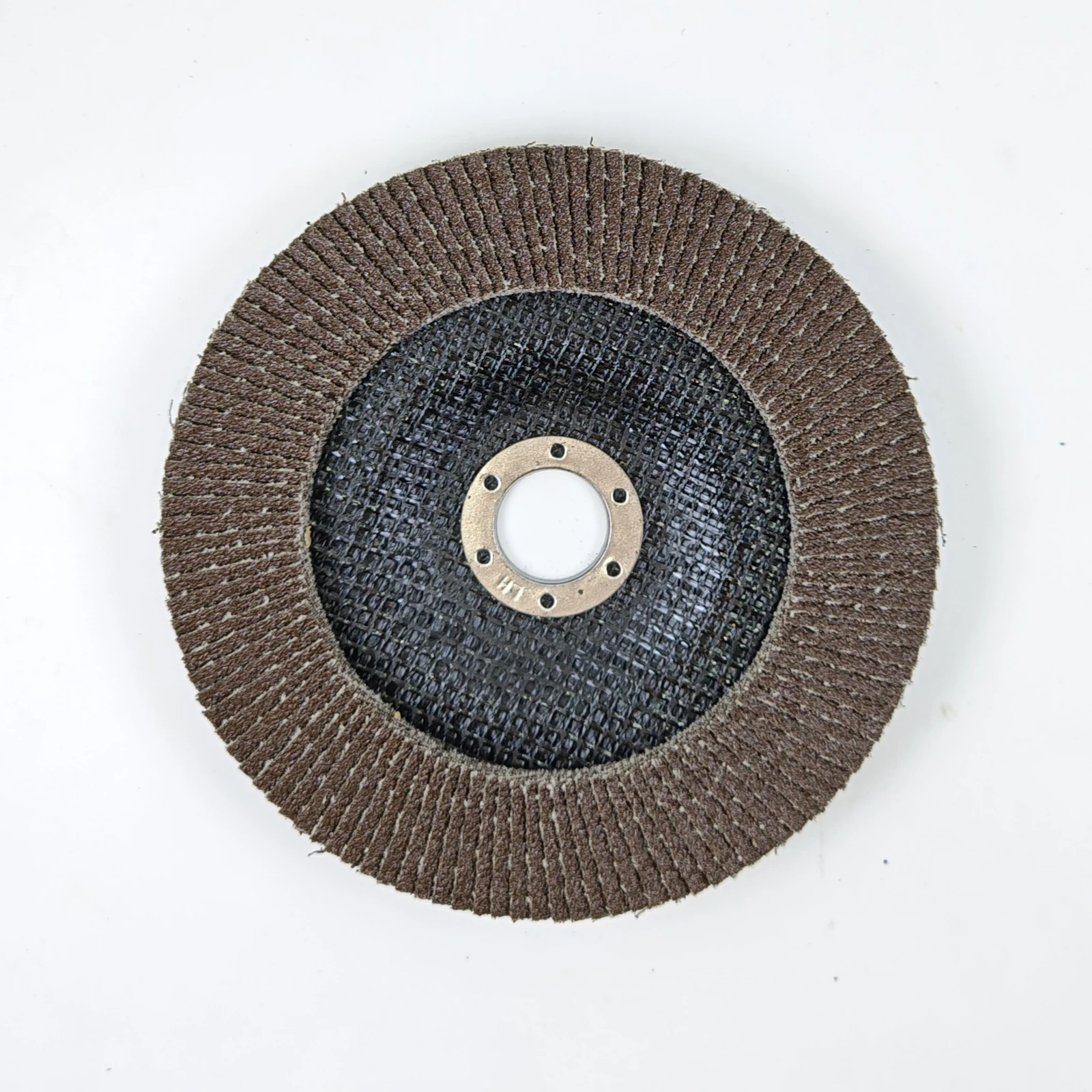
Good finishing begins before the buffing wheel reaches the part. Cutting, grinding, surface preparation and polishing create one connected workflow. Each step should leave a controlled surface for the next, reducing rework and making the final appearance easier to repeat.
1. Define the starting surface and target
Record the workpiece material, geometry, coating, welds, burrs and visible defects. Then define the target: safe separation, a blended weld, a uniform preparation pattern or a bright polished surface. A clear target prevents an aggressive tool from being used where a lighter process would be enough.
2. Cut with a compatible wheel
When material must be separated, select a cutting wheel by material, dimensions, bore, machine and marked speed rating. Secure the workpiece, use the machine guard and appropriate personal protective equipment, and follow the wheel label and machine manual.
3. Prepare with a flap disc
Use a compatible flap disc to reduce weld height, remove burrs, rust or coating and establish an even surface. Choose grit by the amount of removal and the next operation. Check progress frequently so deep scratches or excess heat do not add another corrective stage.
4. Refine with wheel and compound
Move to a cotton buffing wheel and suitable polishing compound when the surface is ready. Match wheel flexibility to the part geometry and keep wheels dedicated to their compounds. Reduce the aggressiveness of the combination as the finish develops.
5. Inspect and document the result
Inspect under consistent lighting and compare against an approved sample. Record the product, grit or construction, machine setting and operator sequence. These notes turn a successful trial into a repeatable production process.
WanHu supplies cotton buffing wheels and coordinates complementary industrial abrasives including flap discs, cutting discs, solid polishing wax and automotive pads. For OEM abrasive supplies or wholesale enquiries, share the complete workflow rather than only the final product name.