
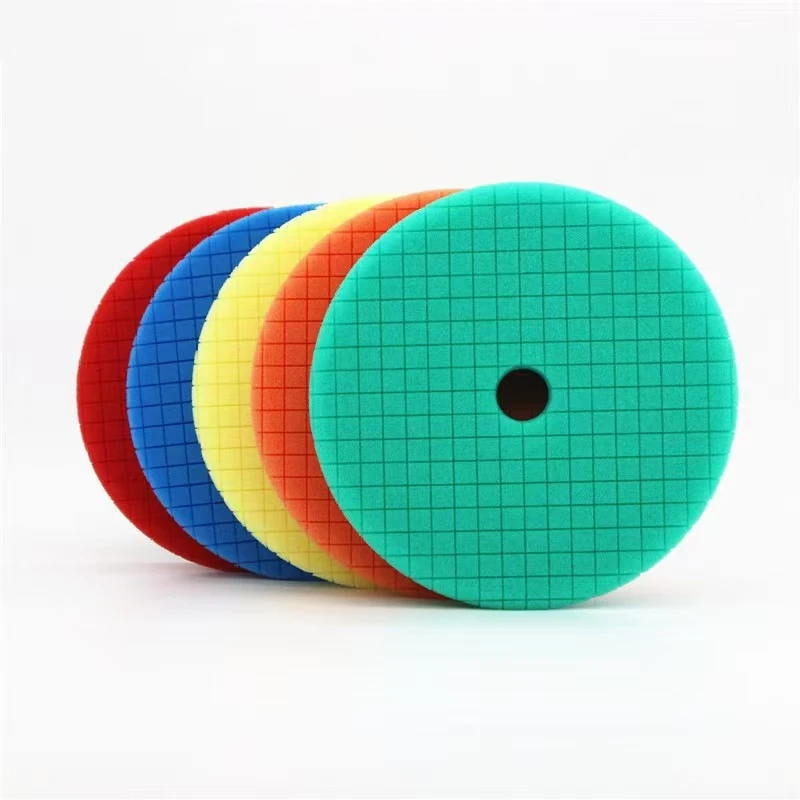
An automotive polishing pad transfers machine movement and polishing product to the paint surface. Its foam density, resilience, face profile and size affect how firmly it works and how well it follows vehicle contours.
Density changes the working feel
WanHu sponge automotive polishing pads use high-density polyurethane with elasticity and resilience. Foam is available in different densities because one contact level cannot suit every step. A firmer pad generally provides a more direct working action, while a softer pad can support a gentler finishing stage. The exact result also depends on the compound, machine, speed, pressure and paint condition.
Shape matters on real body panels
Vehicle panels contain curves, edges and transitions. A lightweight, porous foam pad can follow those shapes more easily than a rigid tool, but the operator still needs to keep the pad stable and avoid concentrating pressure on an edge. Choose a diameter that suits both the backing plate and the area being polished.
Create a clean pad process
- Inspect and wash the vehicle before machine polishing.
- Test the selected pad and product on a small representative area.
- Use separate pads for corrective and finishing products.
- Clean or replace a loaded pad before residue affects the result.
- Inspect the finish under suitable lighting between stages.
Specify pads for wholesale or OEM supply
For an automotive polishing pad enquiry, include foam density or intended stage, diameter, thickness, face design, backing attachment, colour, packaging and expected volume. WanHu can discuss sample orders, wholesale supply and OEM polishing pad requirements without assuming a paint system that has not been tested.