
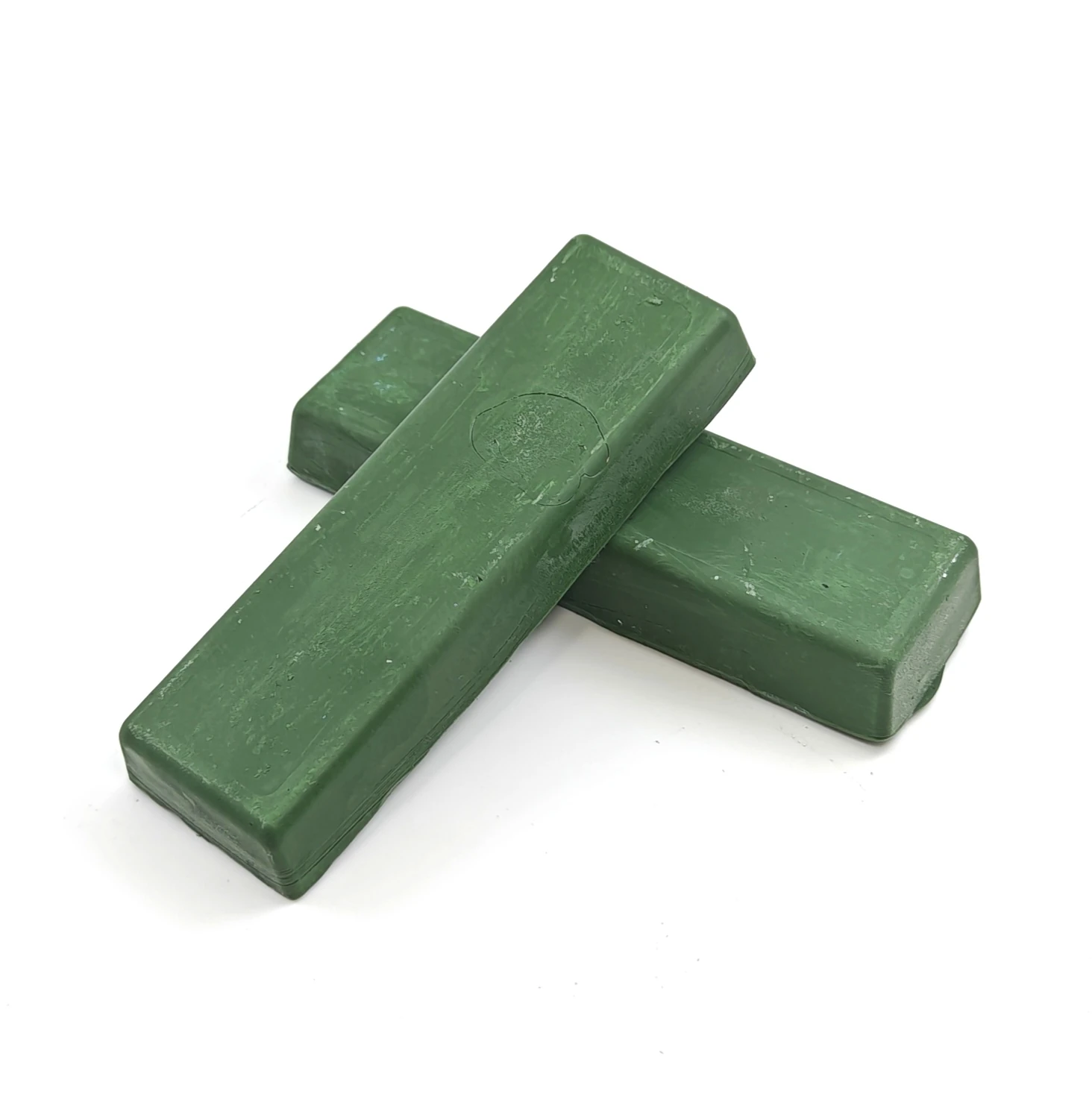
Polishing compound and the buffing wheel work together. The solid polishing wax provides abrasive and lubricating action; the cloth wheel carries the compound to the workpiece and determines how contact is distributed. Selecting either item in isolation can produce an inconsistent finish.
Define cutting and colouring stages
An earlier polishing stage may need more corrective action to reduce scratches or machining marks. A later colouring stage aims to improve brightness and surface clarity. The compound and wheel should suit the same stage. Product colour by itself is not a universal grade standard, so choose by the stated use, workpiece material and desired result.
Control compound loading
Apply compound in small, regular amounts while the wheel is operating according to the machine and product instructions. Overloading can fill the wheel face, generate residue and reduce control. Too little compound can increase friction and make the process inefficient. A stable application routine helps operators reproduce the same result.
Keep each wheel dedicated
Use a separate cotton buffing wheel for each compound and finishing stage. Mark the wheel clearly and store it away from dust or loose abrasive. This simple practice prevents coarse material from reaching the final polishing stage.
What WanHu needs for product matching
Provide the metal or non-metal material, the starting condition, target brightness, wheel dimensions, machine speed and current compound if one is already in use. WanHu solid polishing wax is intended to help remove scratches and produce a bright surface when paired with an appropriate wheel and process. A production trial should confirm the result on the actual workpiece.