
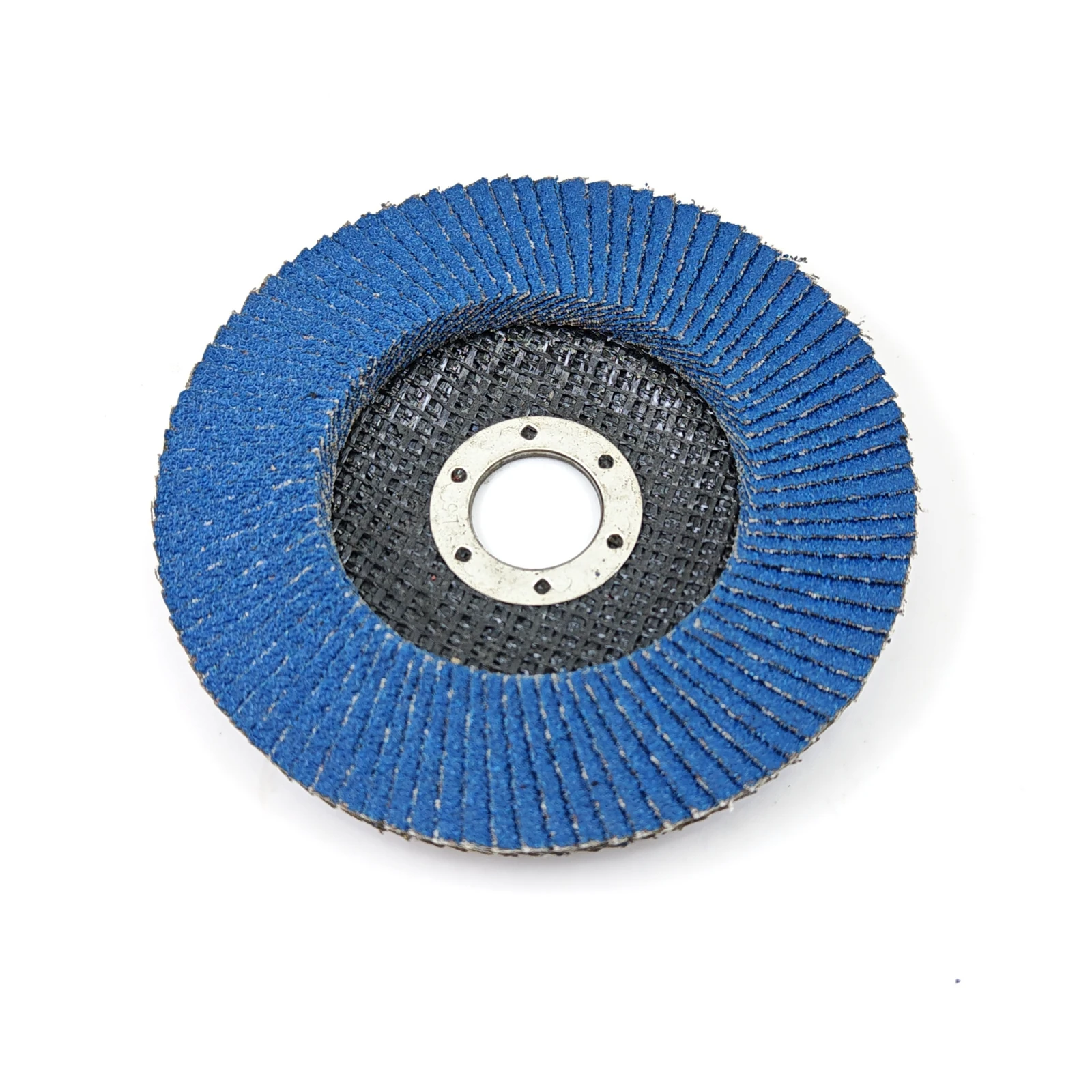
A flap disc combines overlapping abrasive cloth flaps with a supporting backing. As the abrasive works, fresh cutting surface is exposed. This makes the format useful for weld blending, burr removal, rust removal and general surface preparation on compatible materials.
Choose grit by the job that comes next
Coarser abrasive removes stock faster and leaves a more pronounced scratch pattern. Finer abrasive removes less material and prepares a more refined surface. The correct starting point depends on the weld height, coating, oxidation or previous machining marks, but the next process matters just as much. If polishing follows, avoid creating scratches that demand unnecessary corrective work.
Consider the contact angle and workpiece
A flat profile supports controlled contact on broad surfaces. A conical profile can suit angled work, weld seams, edges and shaped components. The tool should meet the workpiece at the intended angle without forcing the operator into an unstable position.
The backing also affects feel and support. Rigidity can help maintain a defined grinding action, while a more adaptable construction can follow the surface. Confirm the material, disc diameter, bore, machine type and marked maximum speed before use.
Build a repeatable surface preparation sequence
- Inspect the part and define how much material must be removed.
- Select a compatible abrasive flap disc and begin with the least aggressive option that can do the work efficiently.
- Keep pressure and contact angle controlled; excessive pressure can add heat and make the finish uneven.
- Inspect the scratch pattern before moving to the next grit or polishing stage.
WanHu supplies flap discs alongside cotton buffing wheels, cutting discs and polishing compounds. For wholesale abrasive enquiries, provide the substrate, operation, disc size, grit, expected quantity and destination.